
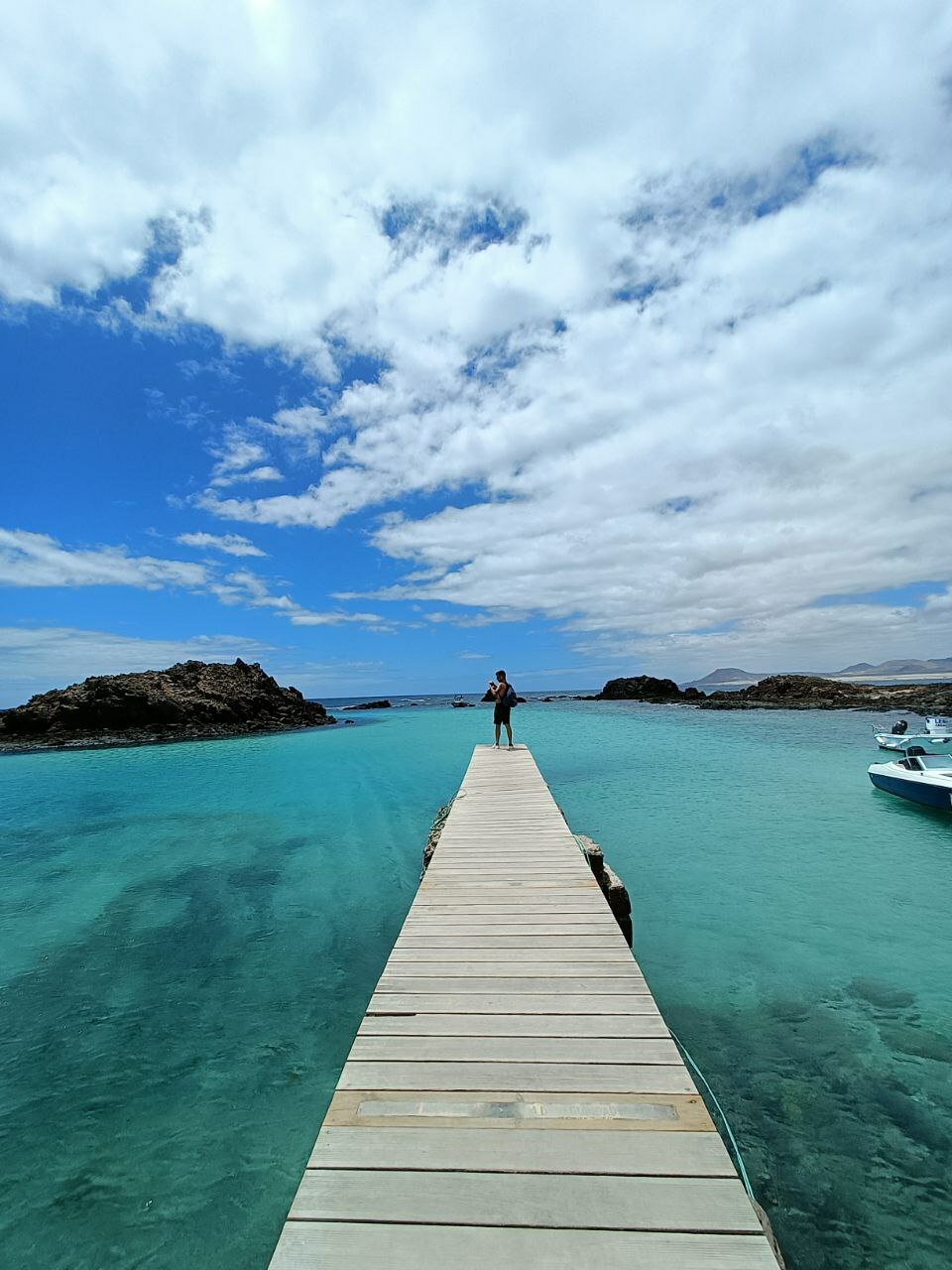
If you're brainstorming ideas for your next trip and the combination of volcanic beaches, lunar landscapes and a spectacular food sounds tempting to you, the Canary Islands will not disappoint you. These islands, located in the Atlantic off the African coast, are a small paradise and traditions that promise a unique getaway.
We have been fortunate enough to get to know every corner of this archipelago and we want to share with you everything there is to know about it what to see and do in the Canary Islands. From the leafy laurel forests at La Gomera to GOLDEN DUNES from Gran Canaria there is a world to discover. So make yourselves comfortable and take note, we begin our journey through the Canary Islands!
Best places to see in the Canary Islands
This archipelago has so much diversity that each island looks like a miniature continent but we will try to summarize some of the highlights to give you an idea:
- We start with Tenerife where the Teide the highest peak in Spain, is waiting for you. This volcano, surrounded by views that seem to be taken from another planet, is a must-see along with its Teide National Park where the lunar landscapes and rock formations will leave you speechless. Add to this the city of La Laguna You will already have a good idea of what Tenerife has to offer.
- Gran Canaria will surprise you with its dunes of Maspalomas that look like a small desert by the sea. But it also has green areas such as the Nublo Rural Park or the Guayadeque Ravine perfect for hiking enthusiasts.
- Lanzarote with its Timanfaya National Park is another world. The Fire Mountains, the caves of the Jameos del Agua or the house of the poet César Manrique are just some of the points not to be missed.
- La Gomera Although smaller, it is a green treasure. Its laurel forests are a remnant of thousands of years ago and walking through the Garajonay National Park is like traveling back in time.
- And we still have Fuerteventura with its endless beaches
- La Palma the beautiful island with its starry sky
- El Hierro the quietest and most magical island.
As you can see, the Canary Islands are a jewel that combines nature, culture and beaches. Whether you are looking for adventure, relaxation or both, these islands have something for everyone, so get ready for a trip full of experiences!

Best places to eat in the Canary Islands
If there is one thing that is certain on any trip is that, sooner or later, the stomach will start to growl. In the Canary Islands, gastronomy is one of the stars. Let's dive into some of the dishes and places you can't miss.
- Starting with Tenerife is almost obligatory to test the wrinkled potatoes with mojo picón (mojo picón). They are potatoes cooked in their skins and served with a spicy sauce that is simply addictive. And to continue, a canary sancocho which is a traditional fish stew. If you are in the northern part of the island, don't miss a visit to the Orotava or Garachico where local restaurants will offer you traditional dishes in a unique atmosphere.
- At Gran Canaria the gofio a kind of flour made from roasted cereals, is a must. It is used in many dishes, from desserts to casseroles, and speaking of casseroles, the watercress stew is a delight.
- Lanzarote with its seafood influence, it is perfect for tasting dishes of fresh fish. A good fish broth in a restaurant overlooking the sea is an experience you will not forget.
- The Gomera has a dish that is a treasure: the almogrote a kind of pate made with cured cheese, peppers and other ingredients that is perfect to spread on a good piece of bread.
- And, in general, in all the islands, you can not leave without trying the local wine. Each island has its own particularities and produces wines with character that reflect the volcanic terrain and special climate of the archipelago.
As you can see, eating in the Canary Islands is an experience that goes beyond satisfying your hunger. It is a way to get to know the culture and traditions of this special place, so, enjoy every bite! Enjoy!
Where to stay in the Canary Islands
With so many places to discover, it is essential to find the perfect accommodation to serve as a base for your adventures in the Canary Islands. Fortunately, there are options for all tastes and budgets.
- Yes Tenerife is your destiny, you can consider the south zone, like Costa Adeje or Playa de las Americas The city is close to lively beaches and a wide range of leisure activities. However, if you prefer something quieter and more cultural, La Laguna or Puerto de la Cruz could be ideal.
- At Gran Canaria the area of Maspalomas is a safe bet for those looking for beaches and fun. On the other hand, if you want to explore the interior and enjoy a more rural atmosphere, the towns of the central area, such as Tejeda offer charming accommodations.
- Lanzarote and its volcanoes invite you to stay near places such as Playa Blanca or Costa Teguise that combine good location with tourist services. There are also rural houses scattered around the island, perfect for a more authentic experience.
- Fuerteventura with its extensive beaches, makes places such as Corralejo are very popular. But there are also areas farther away from the hustle and bustle, such as Betancuria where you can enjoy nature in its purest form, or the south zone, such as Costa Calma more crowded with large hotel complexes.
- For a truly tranquil experience, La Gomera, La Palma and El Hierro offer accommodations that look like something out of a fairy tale. Here, cottages and small hotels are the norm, allowing you to connect with nature and local culture.
As always, we recommend you to book in advance, especially if you are traveling in high season. The Canary Islands are a very popular destination, and the best places can fill up fast, so make your choice and enjoy the Canary paradise!
Best time to travel to the Canary Islands
The climate in the Canary Islands is, without a doubt, one of their great attractions. They are known as the islands of eternal spring, and no wonder. But, like any destination, there are times that may be more suitable depending on what you are looking for your trip.
- The good news is that, thanks to its subtropical climate Any time of the year is a good time to visit the Canary Islands. Temperatures rarely drop below 18°C in winter and rarely exceed 28°C in summer.
- The summer of June to September is perfect if you are looking for sun and beach. Temperatures are warm, but the Atlantic breezes keep you from feeling too hot. Of course, it is high season, so you will find more tourists and prices may be a little higher.
- The spring (from March to May) and autumn (from October to November) are ideal if you want to avoid the agglomerations. Temperatures are pleasant, and the islands are beautiful, especially in the spring.
- The winter of december to february is an excellent option if you are looking for an escape from the routine and cold of the mainland. Although it is cooler, especially at night, it is still warm enough to enjoy the outdoors and sometimes even take a dip in the sea.
Getting around the Canary Islands
Within each island, the car rental is a very popular option. It allows you total freedom to explore those lesser-known corners and adapt the trip to your own pace. The roads are, in general, in good condition However, we recommend caution in mountainous areas where they can be more dangerous.
If you prefer not to drive, each island has its own network of public transportation mainly buses which connect the main towns and tourist spots. They are a practical and economical option, but keep in mind that schedules may be less flexible than if you go on your own.
To travel between the islands, there are several companies of ferries that offer regular routes, especially between the larger islands, such as Tenerife, Gran Canaria, Lanzarote and Fuerteventura. If you have little time and you want speed, there are also inter-island flights operated by local airlines that link all the islands of the archipelago in journeys that usually take less than an hour, the most famous company being Binter.
For the more adventurous, renting a bicycle can be an excellent way to discover the islands, especially in those that are more trowels o have good infrastructure for cyclists, such as Lanzarote or Fuerteventura.
Whatever your choice, getting around the Canary Islands is part of the adventure. Each route will offer you unique landscapes and perspectives of this Atlantic corner. So, with map in hand, let's explore!
How to get to the Canary Islands
By way of air is undoubtedly the way faster and more direct. The islands have several well-connected airports, not only with the rest of Spain, but also with many international destinations Tenerife for example, has two airports Tenerife Norte and Tenerife Sur. Other relevant airports are Gran Canaria at Las Palmas the one of Lanzarote at Reef and that of Fuerteventura at Puerto del Rosario. Throughout the year there are numerous flights, and in high season, frequencies increase considerably.
If you prefer to arrive by sea there are ferries connecting the mainland with the Canary Islands. These depart mainly from Cadiz and Huelva and, although the trip is longer, it can be a different experience, especially if you love the sea. Also, it is an interesting option if you want to bring your own car.
From the islands, as we have already mentioned, there are regular maritime connections between them Therefore, combining several islands in the same trip is perfectly feasible.
 Español
 English
 Français