
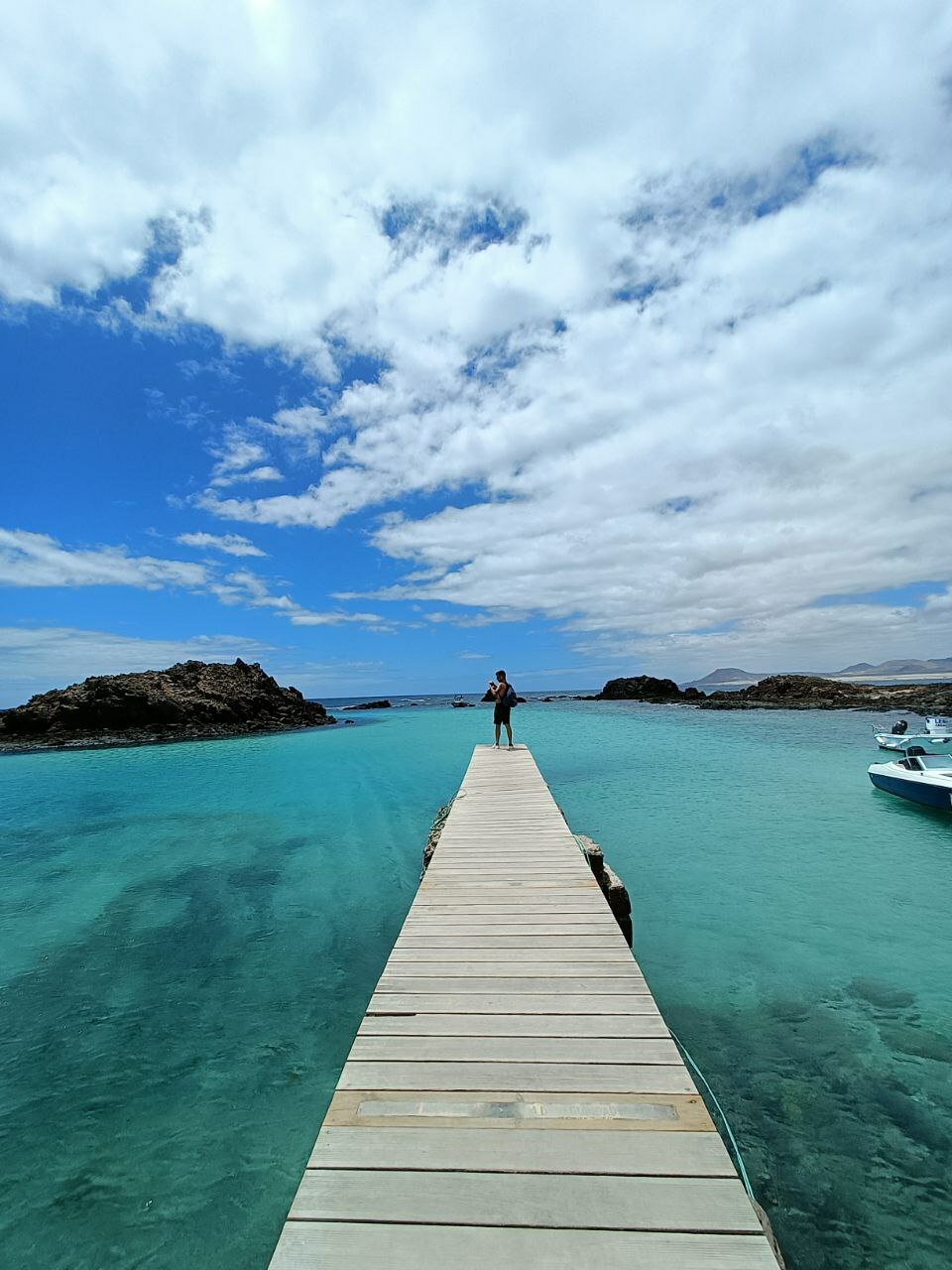
Fuerteventura The island, with its long white sandy beaches and volcanic landscape, offers a perfect blend of relaxation and adventure. If you have a week to explore the island, you're in luck; there's enough to fill each day with a new adventure without feeling like you're missing out on something. In this article, we'll guide you through an itinerary of seven days who will show you both the must-haves and some secrets.
We will also give you tips on outdoor activities such as surfing or hiking, and how to enjoy the local cuisine. We wanted a vacation to know landscapes and beaches very different from those we are used to in the peninsula, so, if you also come looking for that, stay until the end of the post because we will show you the most beautiful parts of Fuerteventura, the most beautiful beaches and landscapes of the island best beaches and the most spectacular places.
- How to get to Fuerteventura
- Best time of the year to travel to Fuerteventura
- Where to stay in Fuerteventura
- Day 1: Natural Park of the Corralejo Dunes and Corralejo village
- Day 2: Lobos Island
- Day 3: Calderón Hondo and Cotillo
- Day 4: La Oliva, Tindaya, the ravine of the enchanted ones and the beach of La Escalera
- Day 5: Barranco de las Peñitas ravine, Ajuy and its volcanic caves
- Day 6: Betancuria, Mirador de Guise y Ayose and Costa Calma
- Day 7: Cofete beach, Morro Jable and El Matorral beach
- Day 8: Sotavento beach and Mal Nombre beach
- Extra day: Lanzarote and Timanfaya National Park
- Questions about Fuerteventura
How to get to Fuerteventura
If you are going to travel to the Canary Islands from the mainland, as we are, the best option is to travel by aircraft. Ryanair makes the route Madrid-Fuerteventura and we did not get a bad price. There is the possibility of arriving by ferry from Huelva, for example, but from our point of view it is not worth it because it is a rather slow journey.
The flight is quite easy, it takes about 2 hours and a half but one thing important to be taken into account:
⏰ One hour less in the Canary Islands
You will arrive an hour earlier than planned because in the Canary Islands there is one hour less than on the mainland. It seems silly but we almost got confused with the pick up time of the rental car 🙄.
To get around the island, we decided to rent a car for a week with TopCar and it was super cheap. We also saw many people who had rented with CICAR. From our point of view, to make the most of the trip it is essential to rent a car to move around the island, so we recommend you to take a look at one of the two companies and the discounts that we leave you below!
Best time of the year to travel to Fuerteventura
As you may know, the temperature in the Canary Islands is usually very mild throughout the year. It is true that in August the heat is somewhat more noticeable, but nothing to do with the temperatures that we sometimes suffer on the mainland.
To give you an idea of the average temperature throughout the summer is about 25º maximum and 21º minimum, while in winter the maximum is 21º and the minimum is about 15º. This allows us to be able to do tourism on the island practically at any time and at any time of the year, although if you go with the idea of spending a lot of time on the beaches and you are a little cold we recommend you to go from June.
For us the ideal month to visit the canary islands is September This month records the highest water temperatures (up to 23º) and super pleasant highs and lows.
Where to stay in Fuerteventura
During our one week stay on the island we changed accommodation once. We spent 4 days in the northern zone around Corralejo and 3 days in the south zone, very close to Costa Calma. This way we reduce the number of car trips and make the most of our vacations.
For us, this is the ideal recommendation for anyone who wants to spend a few days in the area but if you want to know everything we are working on a post in which we will tell you in detail the best places to stay in Fuerteventura and what are the best value for money hotels in each area.
Day 1: Natural Park of the Corralejo Dunes and Corralejo village
We start our route at Puerto del Rosario The airport is in the capital of Fuerteventura, where the airport is located and we had our rental car waiting for us. Once we picked it up, we drove about 30 minutes to Corralejoone of our favorite areas of Fuerteventura both for the beaches and for the nightlife that has the people. We were staying at this aparthotel and we found it a very good choice, the accommodation itself offered a swimming pool, a large terrace in the attic and even a bicycle rental service to move around the island (very typical since the distances are usually short).
What to see in Corralejo Dunes Natural Park
The first thing we decided to visit, since it caught our attention, was the Corralejo Dunes Natural Park which is made up of a dunes impressively large (2,5x10,5km) and dreamlike beaches. The road from Corralejo to the Natural Park is incredible to soak up the scenery so we recommend you to take it and make stops along it, which is what we did. We tell you the most important points of interest and some things that caught our attention:
- Corralejo Natural Park Dunes. They are literally endless, it is an experience to walk through them. Their sand is of marine origin, coming from the pulverization of the shells of mollusks and other organisms, that's why they are so white!
- Beaches of Corralejo Natural Park. One of the beaches with the best views of Fuerteventura from which you can easily appreciate the island of Lanzarote and Lobos Island.
- For more details about the best beaches of the natural park, visit our article with the best beaches of Corralejo.
- Corralitos to protect themselves from the wind on the beach. Throughout your visit you will find a lot of volcanic stone circles piled up that people use to shelter from the winds that often blow on the beaches. They are really a must in Fuerteventura because they make it possible to lie on the sand quietly.


What to see in Corralejo town
After touring the Natural Park, we returned to what was our base point for the first part of the trip, Corralejo a small tourist town in the north of the island.
- There are quite a few points of interest in the village and above all some spectacular beaches. Take a look at our article on the best places to see in Corralejo village so as not to miss anything.
- On the other hand, if you want to go directly to taste the Canarian gastronomy, we recommend you to stay away from the guiri area of the village and focus on having lunch or dinner at the Church Street. We also have an article on the best restaurants to eat in Corralejo.
- To research on the best beaches near Corralejo you can also find the link to our article with all the details: the Great Beaches of Corralejo or the curious popcorn beach are some of the most famous examples. The truth is that all of them are impressive so it doesn't really matter which one you choose.
🍺 Canary Beer
In the Canary Islands, beer is traditionally drunk as a traditional drink Tropical but in Fuerteventura we got to know some more artisanal varieties that we liked very much: our favorite one was the Dorada (it is easily recognized because the logo is a volcano). It is sold both in lager version and in a special This last one was our favorite, try it!
Day 2: Lobos Island
The second day was dedicated to travel through the wolf islanda small island located north of Fuerteventura. For us, visiting it is one of the best plans to visit it essential to do in Fuerteventura. We loved its desert landscape and its blue waters that took you to another planet.
To know the most important points and the route to follow we recommend you to visit our article about this island:
Before planning your trip to the island of wolves, you should know that there is a closed visiting hours and that it is necessary to have a authorization before taking the ferry there. If you don't want to worry about anything there are also excursions that take you there:
- Excursion to the island of wolves with snorkeling.
- Ferry to the island of lobos which includes authorization.


Day 3: Calderón Hondo and Cotillo
The Walk to Calderón Hondo
One of the must for us in Fuerteventura was the visit to its volcano Calderón Hondo One of the best preserved of the island and offers spectacular panoramic views that seem to transport you to Mars. At this article here you have our detailed route, which includes both the volcano and the Red Mountain.

What to see in Cotillo
To eat and regain strength after the volcano we went to the village of Cotillo. It is a small fishing village with a lot of charm, a lot of tourism and a multitude of restaurants. Its main attraction is its beaches which we explain below but can also be visited:
- Castillo del Tostón.
- Lime kilns.
- Path of the cetaceans. Skeletons of beached whales in Fuerteventura that are exposed in different points of the island.


Depending on the time of year you go, you may have some difficulties to park the car near the center as it is a very touristic place. Here we leave you a point where you will be able to find parking even if things are complicated.
Where to eat in Cotillo
In the center of town you will find a lot of good places to eat. We had heard very good things about a place known as The Blue Cow but we couldn't try it because it was closed on the day we went. So we headed to another restaurant that we had seen that had good reviews, Olivo Corso. It is a restaurant of Mediterranean and typical Canarian food, and everything we tried we liked very much. It also has terraces where you are very comfortable and you can eat with the sea in the background.
Best beaches near Cotillo
Near Cotillo you have beaches to bore you but we will show you the two that we had time to visit: La Concha beach and the beach of Los Charcos.
- La Concha Beach. After lunch we went to spend the afternoon at La Concha beach, a 5 min drive from downtown. It was a bit cloudy but we could still feel its crystal clear waters and its fine white sand. It is an ideal beach for snorkeling near the rocky areas that delimit the bathing area.
- Playa de los charcos. Right next to the beach of La Concha, you can almost walk there. It is known as such because of the curious rock formations that compose it. These make that when the tide goes up and down, they form an incredible natural pools that allow you to bathe in very calm pools. We recommend you to take a look at the tide because if it is too low, they will be empty and it will not be worth your while to go near them.


Day 4: La Oliva, Tindaya, the ravine of the enchanted ones and the beach of La Escalera
We decided to dedicate this day to visit some villages that we had pending and to see the famous ravine of the enchanted. The visits we made were quite fast, park the car, go down for a walk and continue with the route.
What to see in La Oliva
La Oliva is a small village to stop and contemplate the views that surround the area, take a walk along the town square and enter the church which is in the same square. Also, you can visit or at least see from the outside the house of the colonels The hotel is an old building from the 18th century where some of the most important people of the island lived.
The truth is that it is highly recommended in all the guidebooks and we found it dispensable, if you lack time we do not recommend it.


What to see in Villaverde
In Villaverde there are the typical wind turbines used to grind grain. Your visit is free and is easily accessible by car. In addition, near the mills you will find again squirrels You will see that they are appearing in the most unexpected places. We leave you the location marked on the map below.
Near Villaverde is the Llano Cave formerly quite famous and very visited by tourists. Do not go to see it because a few years ago it suffered a landslide and has remained permanently closed to the public. We warn you because we know of people who drove more than an hour to visit the cave and found the whole area abandoned.
Map of what to see in La Oliva and Villaverde
What to see in Tindaya
Tindaya is another small village famous for being next to the so called "La Tindaya".Sacred Mountain of Tindaya". Access to the mountain is currently forbidden as the following were found cave paintings in some caves and are protecting and conditioning the area to keep it in good condition.
We took advantage of this stop to try some of the local gastronomy in a local restaurant. It is called los Podomorphs in honor of the footprints found in the mountains and the truth is that we tried some things that we liked. They have craft beers, potatoes with mojo and we dared to try the goat meat in hamburger. A real discovery.


La Escalera Beach
The Escalera beach is a virgin beach of turquoise waters and golden sand in the northwest of the island, in the municipality of La Oliva. It is surrounded by cliffs, perfect for shelter from the wind, and to access it there are some steps that we have read must be newly renovated (because we found them in very good condition). It has no services, which makes it even more magical for our taste and also makes it less crowded.
It is reached by car through a dirt road that is quite decent. Nudism is allowed.


The ravine of the enchanted
After spending the day at the beach, our way back to the beach was through the ravine of the enchanted ones and we decided to do part of the route. This ravine is formed by underwater sandbanks The wind and rain have given the area some curious shapes. It is an area that looks like something out of a Mars movie, and on top of that when you see the marine fossils is even more spectacular. Unfortunately there is a large part that is damaged by visitors who are dedicated to put their names on the formations.
How to get to the ravine of los encantados
The access point is marked on Google Maps as a parking lot (which is basically a piece of land). We leave the location below because at the beginning there is no sign and you do not know whether to keep walking or not. As always, sunscreen and a hat are very important.


Day 5: Barranco de las Peñitas ravine, Ajuy and its volcanic caves
What to see in Las Peñitas ravine
On the way to Ajuy we came across the Las Peñitas Ravine. From here the famous route of the Arco de las peñitas which we did in approximately 1 hour, and the one of the Ravine which we also cut to make it in 1h.
- To see all the details from where to get there, map with the routes and duration, please visit our article with the Arc Route and Las Peñitas Ravine.


What to see in Ajuy
Ajuy is a small, rather touristic fishing village which became famous for its black volcanic sand beach. In the village itself there is a café del Mar from where you can see spectacular views of the sea sunsets with the black beach in the background.
In high season it is no access to the village by car and it is necessary to leave it in a parking lot that we find at the entrance of the main traffic circle.
The first thing we do after leaving the car is to go to the main beach of the town, which, as we mentioned before, is a beautiful black beach which still has parked some boats used by local fishermen to go fishing in the mornings. We found it a very charming place, ideal to rest for a while and take a bath.


Visiting the volcanic caves of Ajuy
Just to the side of the beach you can access a 20 minute route that climbs up to some cliffs, full of fossils, that lead you to the Ajuy caves. Considered the oldest formations of the Canary Islands. On the way to the caves of Ajuy we find some old lime kilns but the best are the views of the cliffs that surround this area.


Day 6: Betancuria, Mirador de Guise y Ayose and Costa Calma
What to see in Betancuria
Continuing with our route around the island we recommend this small town that is on the list of the most visited places in the world most beautiful villages in Spain. We visited it on our way to Costa Calma, our second base on the island, and we loved it. It was the capital of Fuerteventura until the nineteenth century but is now just a small inland town, yes, quite touristy. It is best to get carried away and wander aimlessly through its streets, but we leave you several points of interest:
- Church of Santa Maria.
- Streets of the old town.
- Museum archaeological.
- Guise and Ayose viewpoint (this viewpoint is located before reaching Betancuria).

As it is a rather touristy town, you may have a problem finding a way to park. We leave you an area where we were able to find space since the rest of the places were full.
Guise and Ayose viewpoint
The road from Corralejo to Betancuria passes through this curious viewpoint, whose sculpture represents a Guise and Ayose The island of Fuerteventura, former kings of the island of Fuerteventura. We recommend a quick stop if it is not too cloudy to contemplate the views of the island Las Peñitas route we told you about in the previous day.
🐿¡Squirrels loose!
Once again, if you are attentive, you can find squirrels at this viewpoint.

As you can see, we were not very lucky as the day was quite cloudy and the views were not the best.
Esmeralda Beach in Costa Calma
After a long drive around the island, we arrived at Costa Calma and we are located on the beach which is right next to our hotel: Esmeralda Beach. It is a beach of fine white sand with turquoise waters that make up an idyllic landscape. It is relatively protected from the wind by a cliff and has little influx of people, which makes it even more special. It consists of two bays between which you can walk if the tide is low: a larger one, about 400 meters long, and a smaller one. We were in the Esmeralda North Beach The small one, since our hotel had direct access and it is spectacular.
It is reached by a dirt road in good condition so access is easy and there is plenty of parking. It has hammocks and a chiringuito nearby that has a spectacular view. We took the opportunity to eat there because we were starving after the trip but we do not really recommend it. The food was basic, expensive and on top of that the prices on the menu did not include VAT or in this case IGIC.


Day 7: Cofete beach, Morro Jable and El Matorral beach
Cofete Beach
We continue our route through the south of the island to make a stop at one of the most famous beaches of Fuerteventura. The beach of Cofete is an immense beach of fine golden sand (14 km long!) located in a wild landscape that impresses both for its size and its dreamlike environment that gives a feeling of isolation and total freedom. The beach is located at the foot of the mountains of the Jandía Natural Park The viewpoint is located on the beach, which allows us to have a spectacular view of the beach before arriving (in the blog we will leave you the location of the most impressive and windy viewpoint we have ever seen in our life).
It is a beach where bathing is not recommended because it has strong currents and quite a lot of waves as it is located on the windward side of the island (it doesn't feel like much either, as it is obviously quite windy). It is perfect however for expert surfers and kitesurfers.


How to get to Cofete beach
To get there you have to drive about 50 minutes from Morro Jable on a dirt road that is quite acceptable for cars (we went with a Peugeot 208 and no problem). Of course, you have to drive carefully because the last part of the road is through a very narrow gorge that goes down the mountains.
Cofete beach cemetery
As a curiosity, right next to the parking lot of the beach there is a cemetery so that the inhabitants of the old village of Cofete could bury their people without having to travel 40km to what was the nearest cemetery of the time. Nowadays the village of Cofete as such does not exist, there are a couple of houses and a bar for tourists but nobody lives there permanently.


What to see in Morro Jable
The people of Morro Jable is the typical tourist beach town full of stores, restaurants and hotels. In addition to visiting the town and its beach, we are going to tell you a couple of curiosities that we discovered in the port of Morro Jable and that we think are worth visiting.
See manta rays in the port of Morro Jable
Yes, it turns out that there is a manta ray family who live in the port of Morro Jable. We thought it would be impossible to find them but it was very easy. We approached the area just in front of the fishermen's guild and there they were. We don't know if they are used to people or restaurant owners feeding them but there were at least 4 or 5 manta rays.
If you go to our featured stories from Instagram you can see some video of how they came out of the water to eat.
Visit the turtle recovery center in the port of Morro Jable.
Another visit that we found very interesting is the visit to the Sea Turtle Recovery and Conservation Center. It is located very close to the fishermen's guild that we have mentioned above: Right here.
The turtles can be seen from the outside and from the inside, although it is preferable to go inside and visit them free to get a closer look at the turtles. They have them in giant tubs where they are cared for and maintained and there are all sizes, from the smallest to some of considerable size.

3. El Matorral Beach
El Matorral beach is located right in the middle of the Morro Jable town In front of a promenade full of stores and restaurants. It is accessed through walkways that cross a protected nature reserve where turtles and certain species of plants that only live there live.
In the background, right next to the lighthouse we see a chiringuito and further on we find several hammocks and umbrellas for rent. The water of the scrubland beach is beautiful, one of the bluest I've seen but it's usually quite warm wind so lying quietly on the sand is not exactly easy. The panoramic view is of course a huge sandy beach and turquoise waters without the overcrowding to which we are accustomed makes it worth at least going to see it.


Where are the skeletons of stranded whales?
Throughout the island of Fuerteventura, in the coastal areas, you will find life-size sculptures of beached whale skeletons. These skeletons form The path of the cetaceans, an open-air museum.
The one we show you in the picture belongs to an adult male of 14.5 meters long and weighing 16,500 kilos! that appeared stranded lifeless, on December 14, 2004 on the coast of Los Granillos, municipality of Pájara, south of Fuerteventura. The necropsy revealed that, in this case, the death had been caused by natural causes, but, until very recent times and for more than three centuries, sperm whales were hunted to the brink of extinction.
Day 8: Sotavento beach and Mal Nombre beach
The beaches of the Jandia region are one of the most famous of Fuerteventura. This area of Jandia is characterized by large beaches with miles of sand and turquoise waters. However, in some of them it is very windy so if you want to swim quietly we do not recommend you go to Sotavento You should rather look for a sheltered cove, such as the Mal Nombre beach we tell you about it below.
Sotavento Beach
The beach of Sotavento has a very easy access by car. You can park almost before the sand begins. As we have already mentioned, this is not the ideal beach for a quiet swim but it is worth a visit to appreciate its immensity, contemplate the natural pools that are formed when the tide rises and falls and if you dare we recommend you try some windsurfing or kite surfing.
We opted for the windsurf because for a beginner level it seemed easier and it was a blast. The truth is that it is worth trying the experience because after several days on the island watching people practicing it, you get the bug and being able to get on a board and catch some waves is something special.


Sotavento Viewpoint
An unmissable and not very well known visit is the Sotavento viewpoint. It is indicated as such on Google Maps and is basically a bench from which you can see the entire Sotavento beach. The truth is that the views are breathtaking, it is worth a 5 minute detour from the road to stop here and enjoy the panoramic view.
The rest of the area surrounding this viewpoint is abandoned. It looks like a hotel complex that may have been left half-built due to the lack of a building permit.


2. Mal Nombre Beach
This paradise is one of the most beautiful beaches of Jandía in our opinion: fine white sand and waters of different turquoise tones form this virgin landscape. Named after the ravine of the Bad Name Do not be fooled by the name because you will fall in love with this beach.
Perfect beach for a day of relaxation and disconnection as there are hardly any people. We managed to get a playpen and spent a spectacular day. In addition the beach has a beach bar if you get tired of being in the sun (umbrellas on the beach in Fuerteventura are something that is not carried for obvious reasons).
Visiting the Mal Nombre beach with children
If you go with children, you will be interested to know that when the tide is low, small pools are formed, perfect for the little ones to splash around without any worries.


Extra day: Lanzarote and Timanfaya National Park
Visit to Timanfaya National Park
One of the things that we missed was to visit Lanzarote and the Timanfaya National Park. We had looked at it but in the end it did not fit in our planning, but we leave you here the two excursion options:
- The first option is a organized excursion to Timanfaya national park all inclusive. The idea is to take the whole day. You leave by boat from Corralejo to one of the most famous beaches of Lanzarote: Playa Blanca, where you can take a swim. Then you take a bus that takes you to the national park whose entrance fee is also included. The tour through the park is mandatory for all visitors to do it by bus to preserve the natural environment but you can get off at several points along the route to take short walks and take pictures.
- The second option is to set up your tour by Lanzarote on your own. Here only includes boat transportation to the neighboring island, the only downside is that you will have to rent a car or motorcycle in Lanzarote to move around the island beyond the white beach area.
Questions about Fuerteventura
What is the least windy month in Fuerteventura?
In Fuerteventura, known by many as the "Island of the Winds"wind is a predominant factor in its climate throughout the year. Generally, the windiest months are the summer ones, mainly july and august The World Windsurfing and Kitesurfing Championships are held here due to the strong wind currents that benefit these sports.
On the other hand, the months of september, october and november are usually those of less wind in Fuerteventura. During this period, weather conditions become calmer and the wind is less intense, which can make these months ideal for those who prefer to enjoy the island with less wind.
However, although October and November are considered the least windy months, Fuerteventura is a windy island in general, so some wind is always likely to be encountered.
For lovers of water sports such as surfing, windsurfing or kitesurfing, Fuerteventura offers ideal conditions all year round, while for those who prefer a calmer climate, the less windy months may be a better option.
Anyway, if you go in a very windy season, in all the beaches you will find the corralitos that we have shown you throughout the article. Once inside one of these, you won't even notice the wind outside.
Where to see the best sunsets in Fuerteventura?
Fuerteventura offers a multitude of places to enjoy beautiful sunsets. Here we tell you some of the best places:
- El Cotillo This quiet fishing village is located in the northwest of the island and is known for its incredible sunsets. The beaches of El Cotillo, with their crystal clear waters and white sand, offer a magnificent visual spectacle when the sun sets, painting the sky with vibrant colors.
- Corralejo and the Dunes Corralejo: North of Fuerteventura, Corralejo and its Natural Park are famous for its white sand dunes. Here, the contrast of the blue sea with the golden sand creates a unique atmosphere to watch the sunset. You can even climb to the top of a dune for an unparalleled panoramic view.
- Morro Velosa Viewpoint This viewpoint is located near the old capital of the island, Betancuria. From here you can get panoramic views of the whole center of Fuerteventura, allowing you to see the sunset over the mountains and volcanic valleys.
- Puerto del Rosario The promenade of the island's capital is a perfect place to enjoy the sunset. There are numerous bars and restaurants where you can dine while watching the sun disappear into the horizon.
- Cofete Beach This beach, considered one of the most beautiful in Europe, is located on the peninsula of Jandia, south of the island. It is a remote and less touristic place, which makes it a perfect place to enjoy the sunset in a quiet atmosphere.
- Lighthouse of La Entallada Located near the Great Beaches of Jandia, this lighthouse is one of the closest to the African continent. Its elevated position offers breathtaking views of the ocean and is an idyllic place to watch the sunset.
- Toston Lighthouse Near El Cotillo, this lighthouse is another wonderful place to watch the sunset. Surrounded by wild beaches, it offers a breathtaking view of the Atlantic and the volcanic landscape of Fuerteventura.
- Betancuria This small town, which was the first capital of Fuerteventura, is located in a valley surrounded by mountains. From here, you can enjoy a breathtaking sunset overlooking the mountainous landscape.
No matter where you decide to watch the sunset, Fuerteventura is sure to offer you an unforgettable spectacle.
👇 You may also be interested in:If you want to read other articles ideal for your trip that complement What to see in Fuerteventura in 7 days you can visit our posts about Fuerteventura.

 Español
 English
 Français
Other interesting articles: