
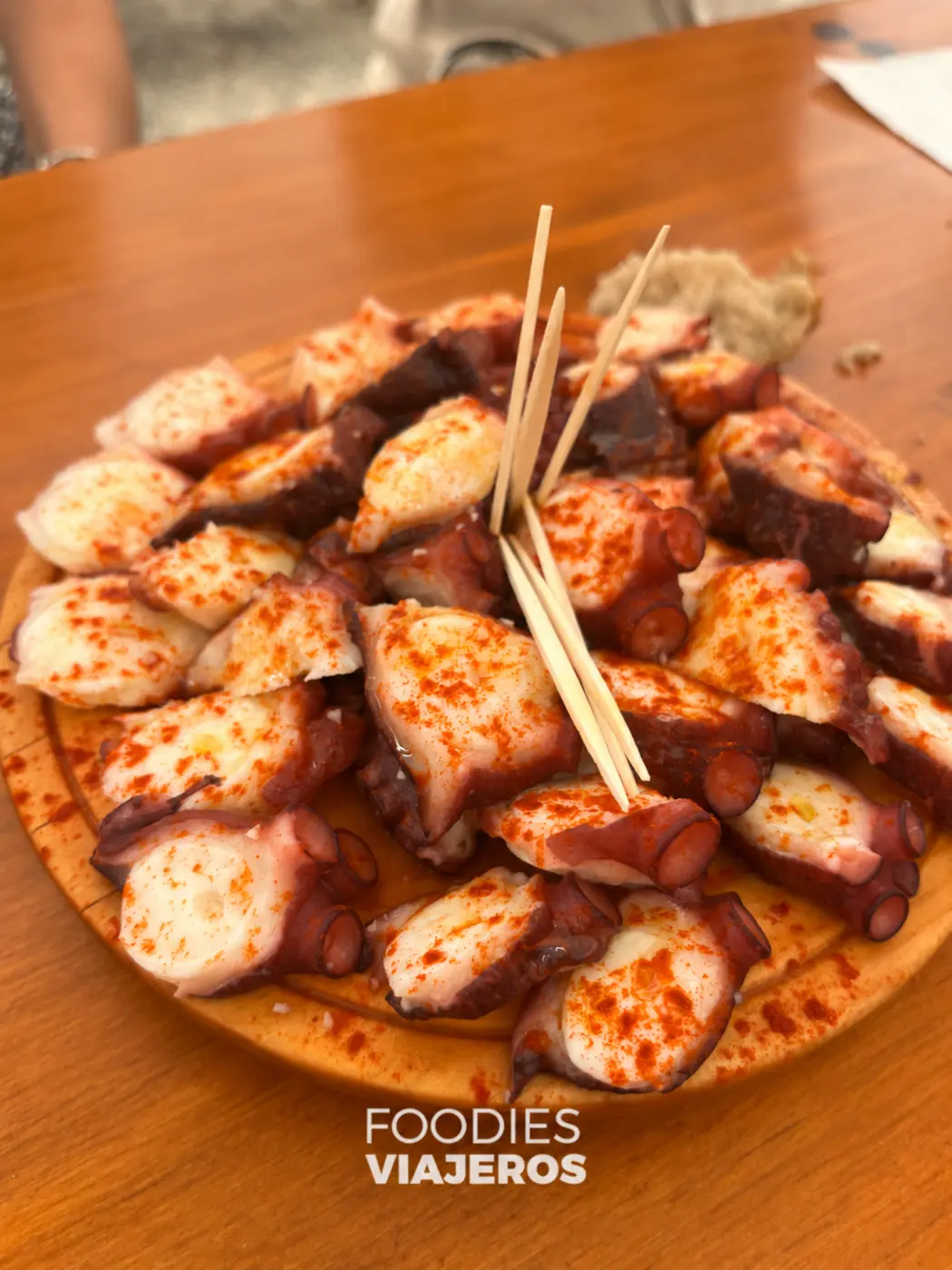
If you are looking for What to See in Allariz in One Day, we invite you to take a stroll through its cobblestone streets, the squares of the historic district, and along the banks of the Arnoia River. We visited this town in Ourense in August and really enjoyed it, especially the area along the river. We also took home a culinary memory that’s hard to beat: pulpo a feira, paired with a Godello white wine—it’s still the best we’ve ever had.
Here's what we have to say How to Plan Your Visit and Which stops to include to enjoy the town without rushing around.
- How to Plan a One-Day Trip to Allariz
- Campo da Barreira, Santa Clara, and the Pulpeiras
- The Festa do Boi sculpture and the Church of San Pedro
- Santo Estevo and the streets of the historic district
- The remains of the Allariz wall
- Praza Maior and the Church of Santiago
- Rúa do Portelo, shops and museums
- Santa María de Vilanova
- Vilanova Bridge and the promenade along the Arnoia River
- International Garden Festival—a visit to round out the day
- What to See Near Allariz If You Have More Time
- Where to Stay in Allariz
- Tips for Visiting Allariz
How to Plan a One-Day Trip to Allariz
Allariz has a fairly compact downtown area, and you can connect the Top Places to Visit on Foot. For a first visit, we recommend spending the morning in the historic district, stopping for lunch, and setting aside part of the afternoon for the river. As a general guide, plan on about three or four hours for a walk with stops; if you add a meal, a museum, or the gardens, you can easily fill the day.
You can start at Campo da Barreira, continue toward Santo Estevo and Praza Maior, stroll through the shopping streets, and head down to the Vilanova Bridge. From there, continue along the Arnoia River and extend your walk depending on how much time you have.
Campo da Barreira, Santa Clara, and the Pulpeiras
The Campo da Barreira It is a large plaza next to the Old Town where you'll find the Santa Clara Monastery and the Church of San Bieito. The contrast with the narrower streets in the city center is immediately apparent: there's plenty of room here for markets and celebrations, and it's a good place to start getting your bearings.
When we were there in August, we came across some tents with pulpo stalls and sat down to eat. There were wooden benches, and the waiters came over to take our orders, so the plan was as simple as finding a spot and ordering something. The atmosphere was really cool, and although you could also order meat, we went for the Octopus "a feira" with Godello white wine. It was absolutely delicious; in fact, it's the best octopus we've ever had. It's one of those meals you end up remembering just as much as the places you visit.
The octopus vendors They're tied to the fair days, so don't expect to find the tents set up on just any day. If you'd like to go again, check with the tourist office or the city hall's website beforehand to confirm that the market is taking place.
Before continuing, take a look at the two stone crosses in front of San Bieito. Next to it is Santa Clara, whose museum of sacred art It's an option if you're interested in this kind of tour.
- Visiting Hours: from 10:30 a.m. to 1:00 p.m. and from 5:30 p.m. to 7:30 p.m. (closed on Tuesdays; hours vary in winter and on Sundays).
- Price: Free.
The church of San Bieito It's open every day of the year.
The Festa do Boi sculpture and the Church of San Pedro
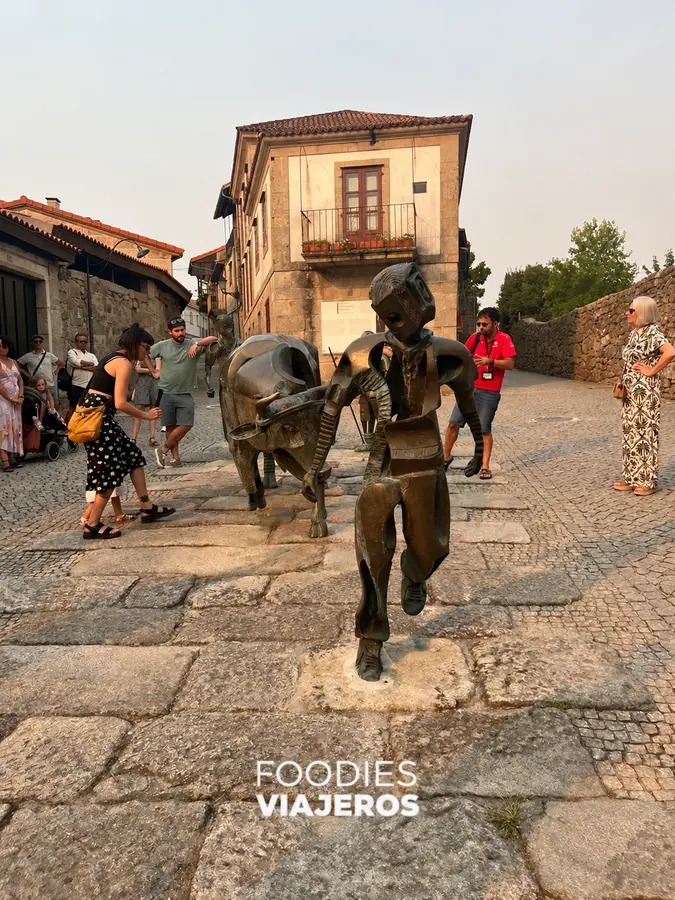
When you enter the old town, head over to the sculpture from the Festa do Boi, in the area around Entrecercas and the Praza do Eiró. The sculpture depicts an ox and several participants in this celebration, one of Allariz’s most deeply rooted traditions. It’s a quick stop that you can combine with a stroll through downtown.
The festival is held around Corpus Christi, between May and June, and its origins date back to the 14th century. During those days, ox races wind through the town’s streets, accompanied by a program of activities and music. We visited in August, so we weren’t lucky enough to catch the festival; however, the sculpture offers a glimpse into this tradition at any time of year.
Just a few steps away is the St. Peter's Church, in Praza do Eiró. It is of Romanesque origin and is another church you can include in your tour without straying far from the center. If you find it open, be sure to take a look at its Baroque altarpiece and the tombs inside. Afterward, you can continue along Rúa Hospital toward O Portelo.
Santo Estevo and the streets of the historic district
From Campo da Barreira, you can visit Saint Stephen and continue toward the town center. Its church retains Romanesque features and has a tower that was added later. On the outside, there are three tombs set into the wall: it’s one of those details you might overlook if you only look at the facade head-on.
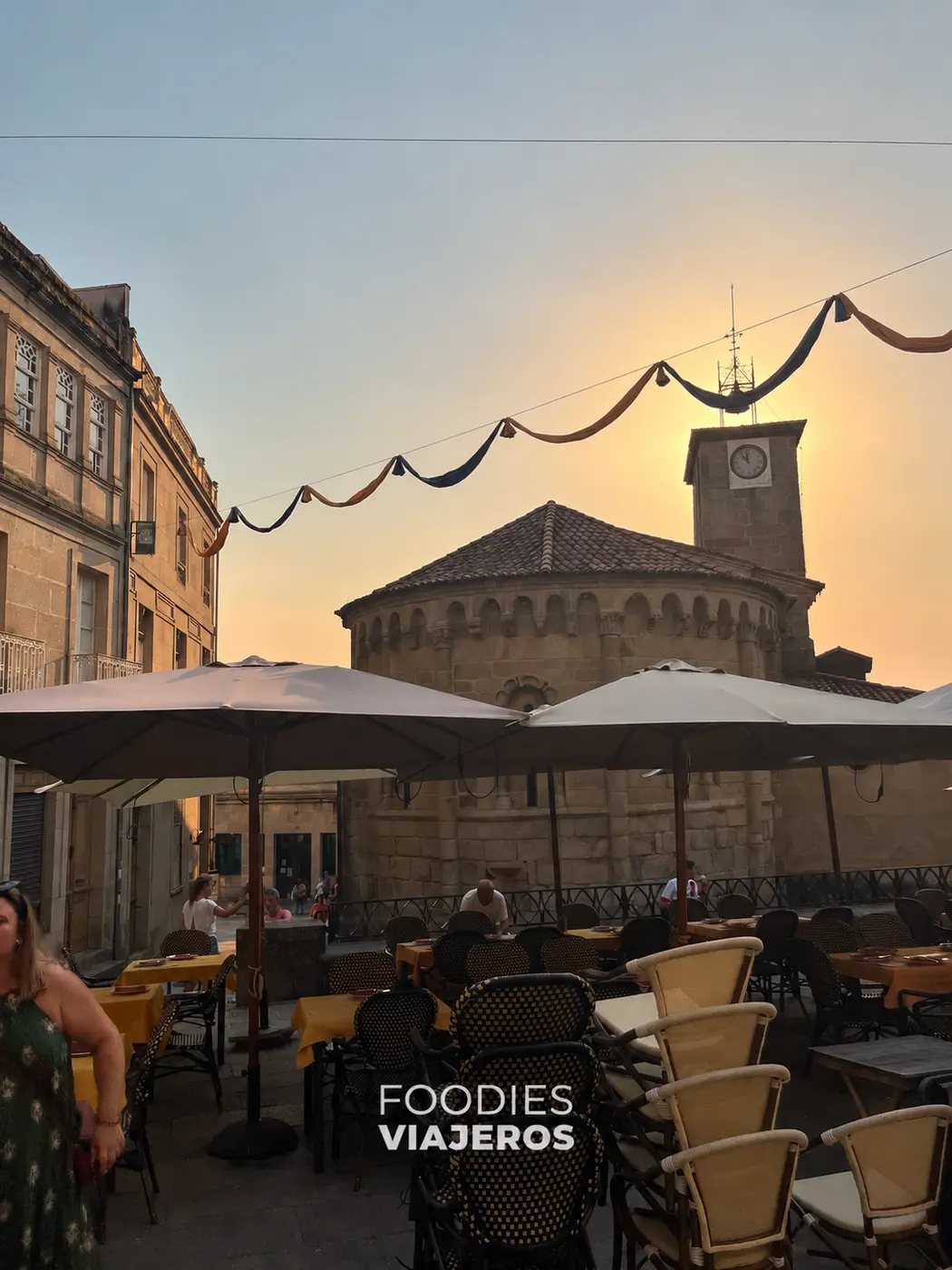
From here on, the tour consists of moving from one place to the next cobblestone streets, stone houses, and small squares. Allariz retains its medieval layout, but it’s also a town with shops and homes that are still in use. There’s no need to track down every monument on the map; the best thing to do is to wander the streets and get lost, taking some time to stroll through the streets between Santo Estevo, O Portelo, and the Praza Maior.
The remains of the Allariz wall
Near Santo Estevo, you can look for the remains of the old city wall. Don't expect to find a complete wall to walk along: what remains are sections that help you imagine how the medieval town was defended. The area around Rúa Xardín and the nearby streets still preserves part of that defensive structure.
It’s a short detour that’s well worth taking when exploring this part of the historic district. Along with the churches and the layout of the streets, it offers a better understanding of Allariz’s past without turning the visit into a series of museum stops.
Praza Maior and the Church of Santiago
The Praza Maior It is one of the main stops in the Old Town. There you'll find the City Hall and the Church of Santiago, a Romanesque church with a rather austere stone façade. The size of the square allows you to stop and look at the buildings without spending too much time moving from one spot to another.
If the church is open, you can go inside to see it; if not, it’s still worth stopping by to take in the square as a whole and the streets that lead to it. From here, it’s easy to continue on toward the Vilanova area or retrace your steps to explore other parts of downtown.
In addition to O Portelo, you can explore the Fonteiriña Street, another street lined with shops and outlet stores. Both fit nicely into a stroll between the downtown squares; you don't need to take the car to go from the cultural sights to the shopping district.
Rúa do Portelo, shops and museums
In the Portelo Street In the surrounding streets, you’ll find shops housed in stone buildings, small businesses, and some of Allariz’s museums. The town has a long tradition of commerce and craftsmanship, and the outlet stores featuring Galician brands are another reason why some people come here. If you’re interested in shopping, you can fit it into your stroll without having to plan a separate visit.
To add an indoor tour, you can use the Galician Toy Museum, featuring collections of games and toys, and the Fashion Museum, dedicated to the textile industry and life in Allariz in times past.
- Visiting Hours: Saturdays, Sundays, and holidays, from 11 a.m. to 2 p.m. and from 5 p.m. to 7 p.m. (extended hours in the summer; closed in January and February).
- Price: 2 € per museum (Xoguete, Moda, and Coiro pass: 3 €).
Santa María de Vilanova
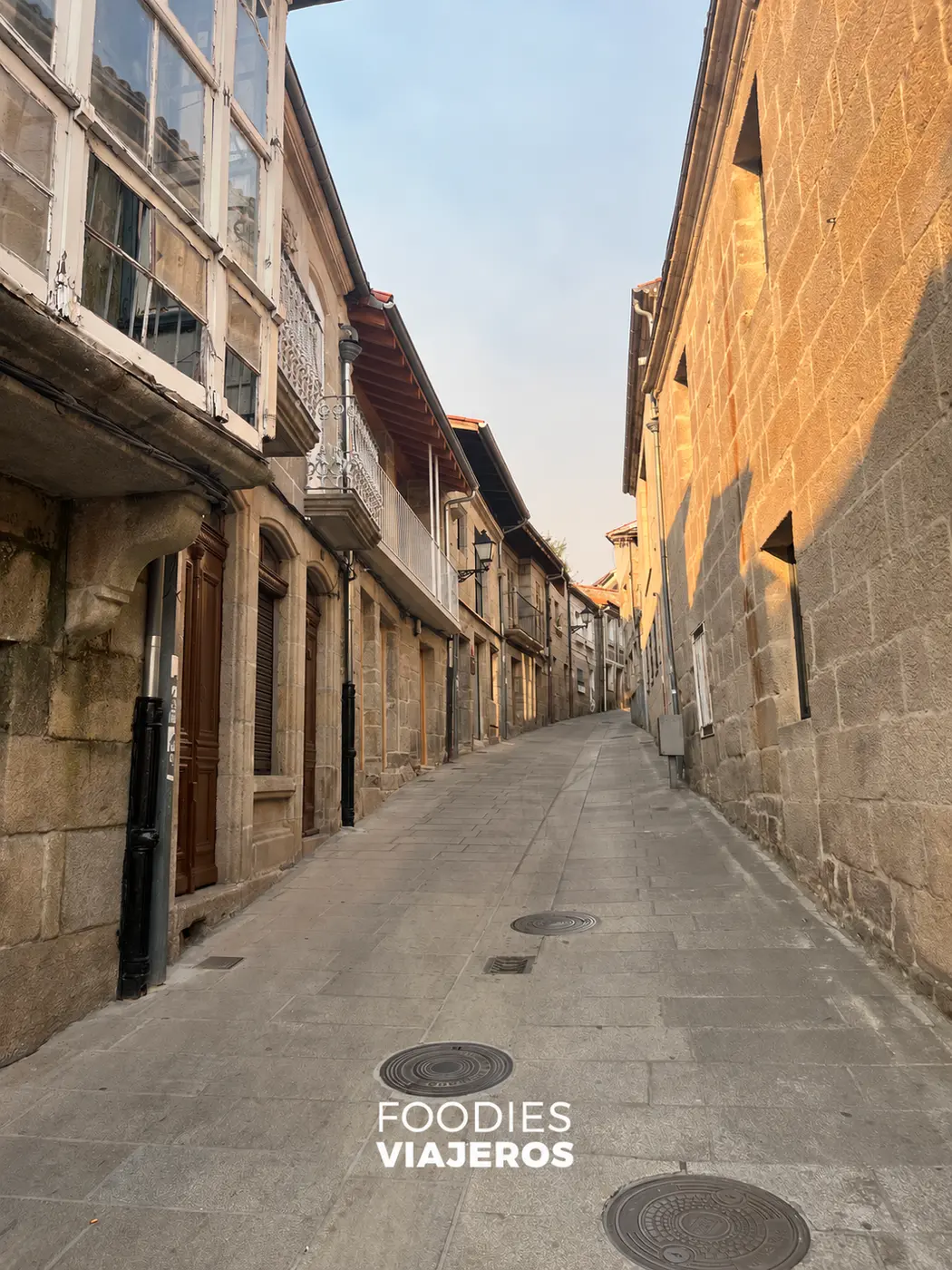
As you approach the bridge, be sure to stop by the Church of Santa María de Vilanova. It is a Romanesque church that has undergone subsequent renovations, so its current appearance reflects a blend of different periods. Walk around the building to see the side entrance and the stone details under the eaves, as well as its main facade.
Its proximity to the Arnoia River means you can stop by on your way to the riverbank. This way, you can finish your tour of the town’s churches without having to walk all the way back from the other end of the historic district.
Vilanova Bridge and the promenade along the Arnoia River
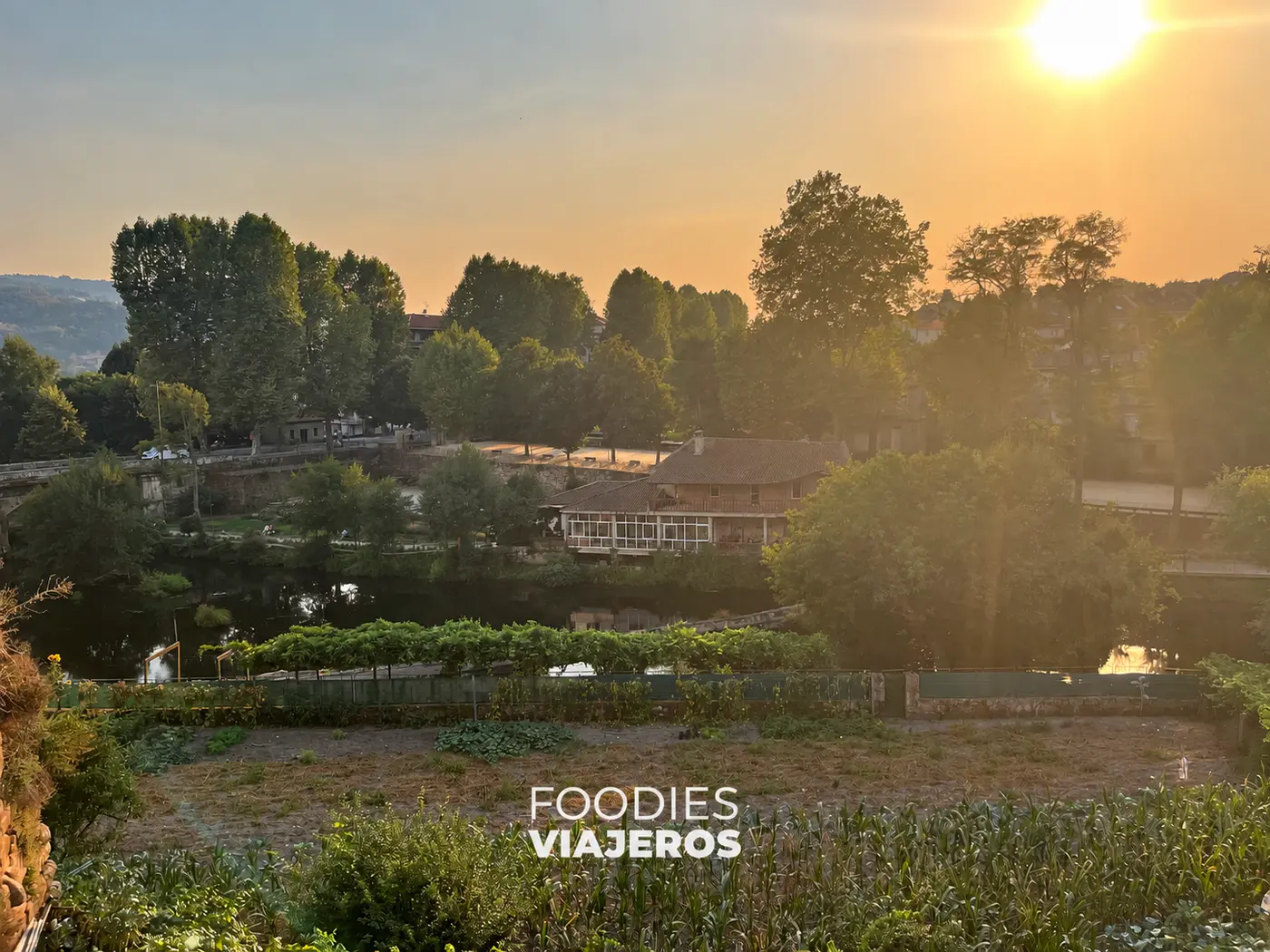
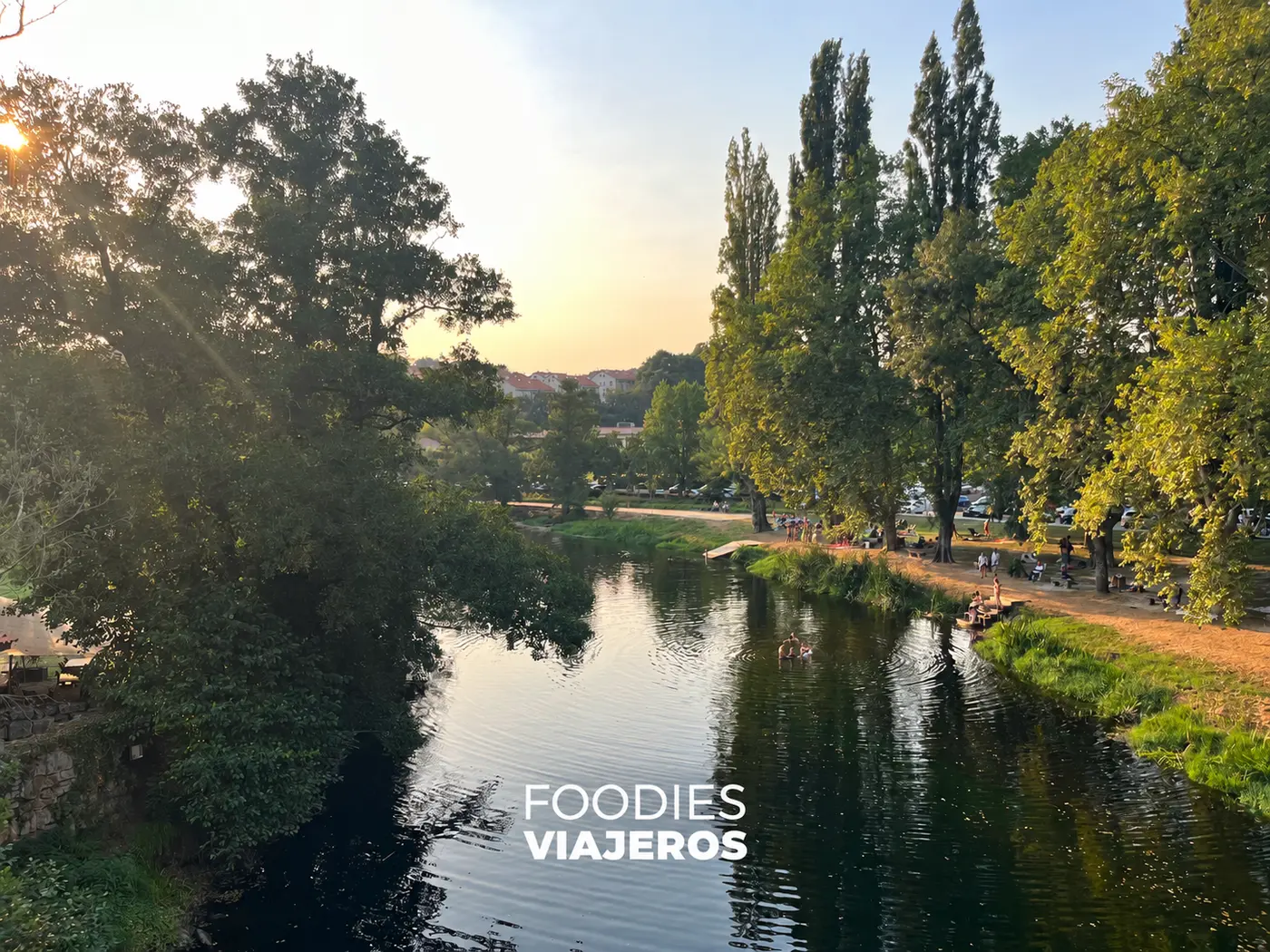
The Vilanova Bridge, built of stone with arches spanning the Arnoia River, is one of Allariz’s most recognizable landmarks. As you approach, you’ll see how the landscape changes: the streets of downtown give way to the water, the riverside vegetation, and the walking paths. It’s worth seeing it from the riverbank—as well as crossing it—to appreciate the bridge in harmony with the river.
This was our favorite part of Allariz. The historic district is very interesting, but We would especially highlight the area around Arnoia. If you only have a few hours, we recommend setting aside some time to come down here instead of spending your entire visit exploring the streets of downtown.
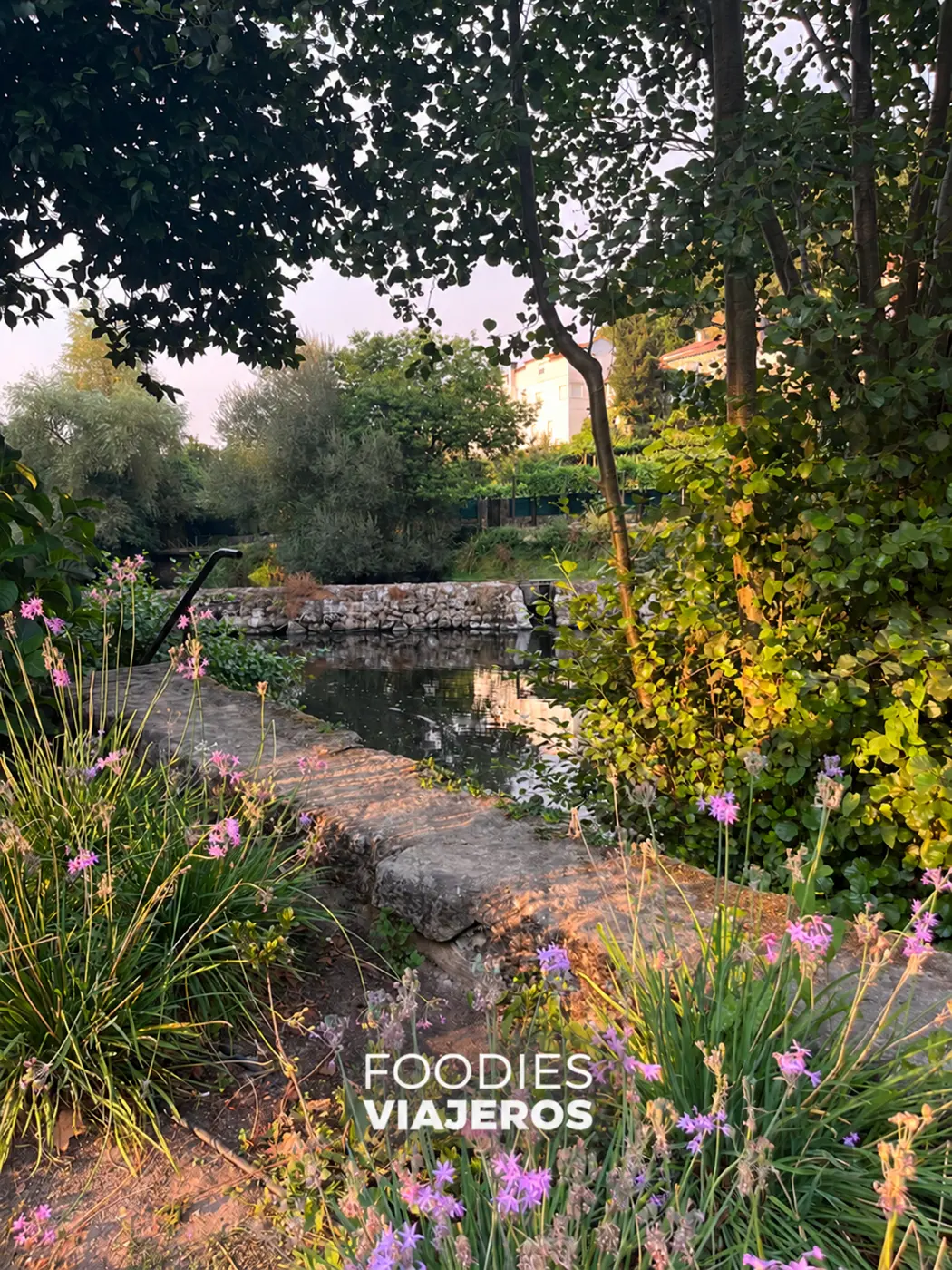
You can explore the riverfront in sections, combining the areas of Alameda, O Arnado, and Portovello. You'll find green spaces, paths along the water and historic buildings related to river-based trades. You don’t have to go very far to enjoy this part: pick a section, take a stroll, and head back whenever you like. If you want to continue, the riverbank offers plenty of opportunities to extend your walk.
The Coiro Museum and the Traditional Trades of the River
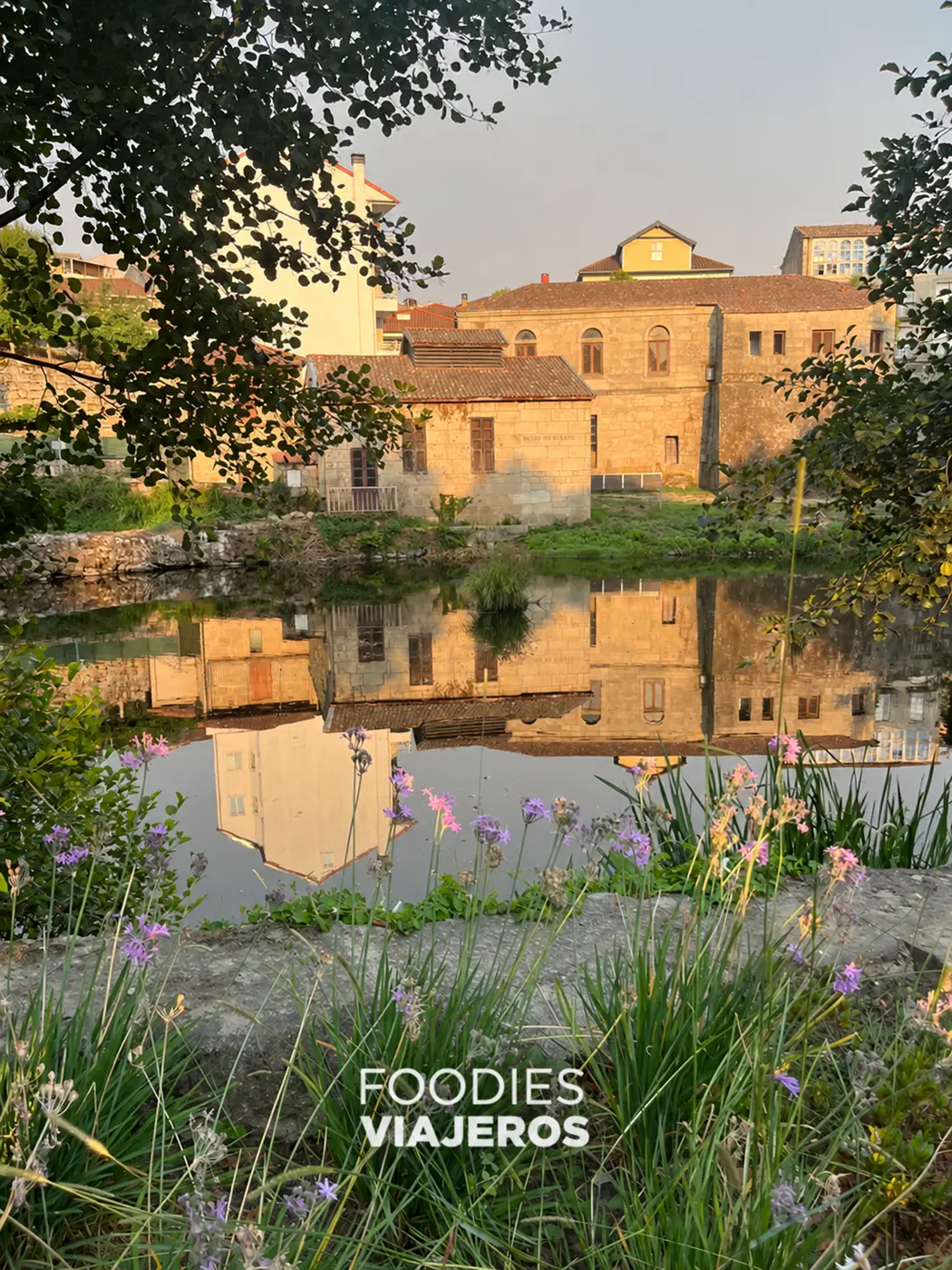
In Portovello, there is the Coir Museum, housed in the former Nogueiras family tannery. It helps visitors understand that this riverbank was also a workplace, linked to the use of water and the tanning of hides. The Burato Mill It is another of the structures that reflect the relationship between the river and the town's activities. If you're interested in local history, you can include the museum in your walk.
- Visiting Hours: Saturdays, Sundays, and holidays, from 11 a.m. to 2 p.m. and from 5 p.m. to 7 p.m. (extended hours in the summer; closed in January and February).
- Price: 2 € (included in the 3 € three-museum pass).
These structures are part of the Arnoia River Ethnographic Park, which also includes the O Fiadeiro Textile Museum. The complex brings together the crafts of leatherworking, weaving, and milling and is part of the Portovello walking tour.
To make the most of the quieter part of the day, you can head over to Acearrica, the river beach area. It's a great way to spend more time by the water or take a break during the summer.
International Garden Festival—a visit to round out the day
Next to the river, on Paseo do Portovello, is the grounds of the Allariz International Garden Festival. It features garden designs that change with each edition and combine vegetation with landscaping concepts. It offers a different kind of experience from the squares and churches of the historic district.
We'd suggest this as an option if you have the whole day and would like to add it to your outing. The grounds are open seasonally and are a great way to spend the afternoon by the river.
- Visiting Hours: In the summer, from 11:30 a.m. to 2:00 p.m. and from 5:00 p.m. to 9:00 p.m. (seasonal hours; hours vary during the rest of the season).
- Price: 2 € (reduced rate: 1 €; children under 12 accompanied by an adult: free).
What to See Near Allariz If You Have More Time
If you have one more day, you can combine a visit to Allariz with Ourense or come to Ribadavia to stroll through its historic center and its old Jewish quarter. These are suggestions for extending your getaway; for a one-day trip, we’d stick to the tour of Allariz, with time to have lunch and enjoy the river.
The Ribeira Sacra It's another option for continuing your trip, but it's worth planning it well and choosing your stops carefully. If you're heading to that area, you can check out our guide to What to See in Monforte de Lemos to prepare for one of the visits.
Where to Stay in Allariz
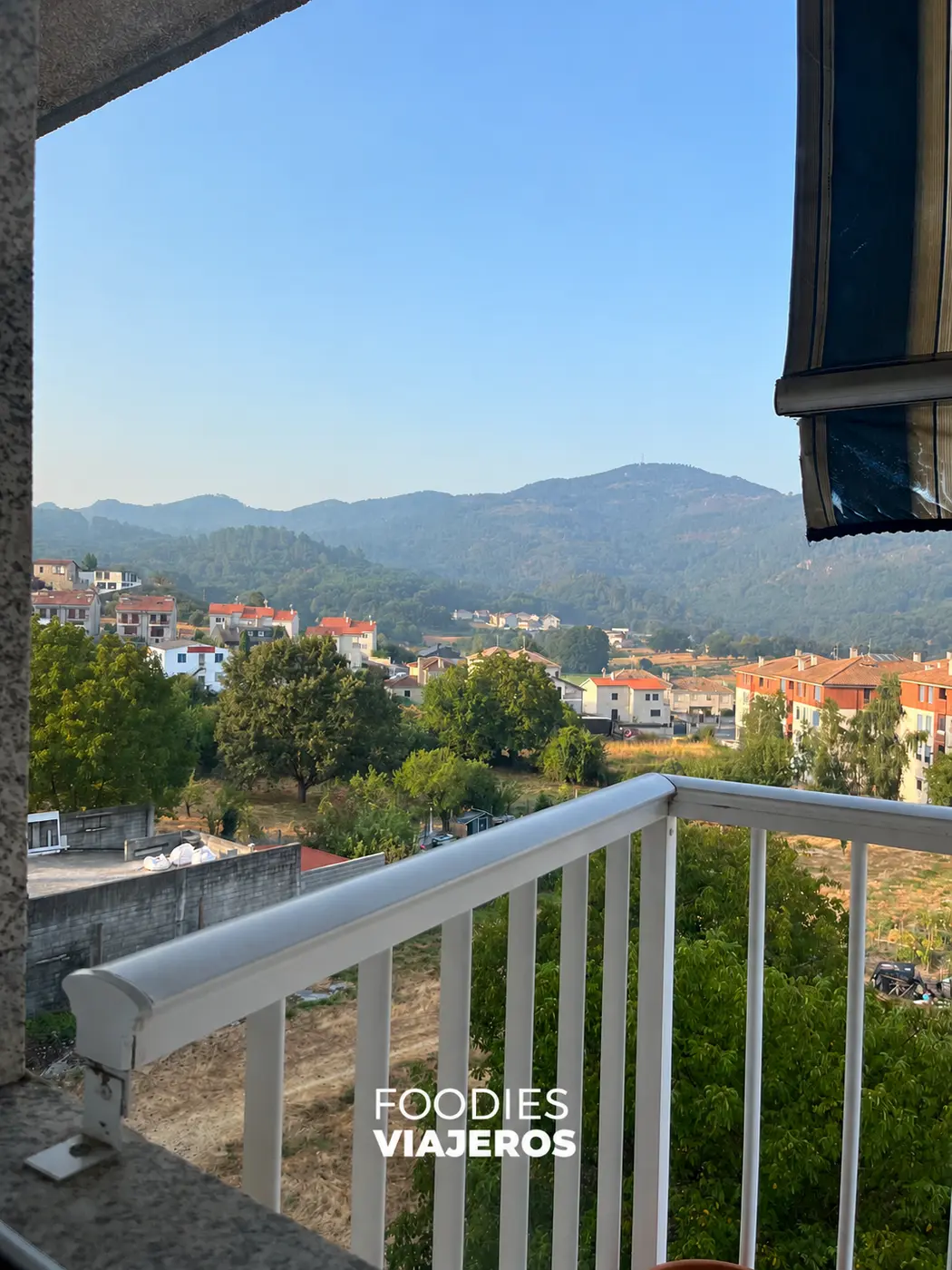
You don't have to stay overnight to visit the town, although staying here allows you to spread out your visit over the afternoon and the following morning and enjoy it at a leisurely pace. If you want to get around on foot, look for lodging in the historical center or near the riverbank. Before booking, check where you can park your car and whether there are any restrictions on access for unloading luggage.
Tips for Visiting Allariz
How to Get There and Where to Park
Allariz is south of Ourense and makes for a convenient stop if you're touring the province by car. Use the following as a reference: about 25 minutes from Ourense, depending on your starting point and traffic conditions. Once you arrive, the most convenient option is to park your car outside the historic district and explore on foot.
The surroundings of the Campo da Barreira It's a good place to look for parking. On market days or when events are held, part of the plaza is set aside for stalls and tents.
When to Go and What to Bring
We went in August And we really liked the idea of combining the walk with a meal under the tents. The weather was absolutely wonderful—it was even hot—so much for the saying that it always rains in Galicia!
At spring and autumn You can combine a stroll through the streets with a walk along the riverfront. Museums are another option to round out your visit during those times of year if you happen to run into a rainy day.
If you have less than a day
For a shorter visit, we would focus on Campo da Barreira, Santo Estevo, Praza Maior, the Vilanova Bridge, and a stretch along the Arnoia River. We'd leave shopping, museums, and gardens as optional extras. And if you can manage to eat in town, all the better: in our case, that octopus with Godello ended up being one of the best parts of the stop.
👇 You may also be interested in:If you want to read other articles ideal for your trip that complement What to See in Allariz in One Day: A Walk, Places to Visit, and Tips you can visit our posts about Galicia.

 Español
 English
 Français
Other interesting articles: