
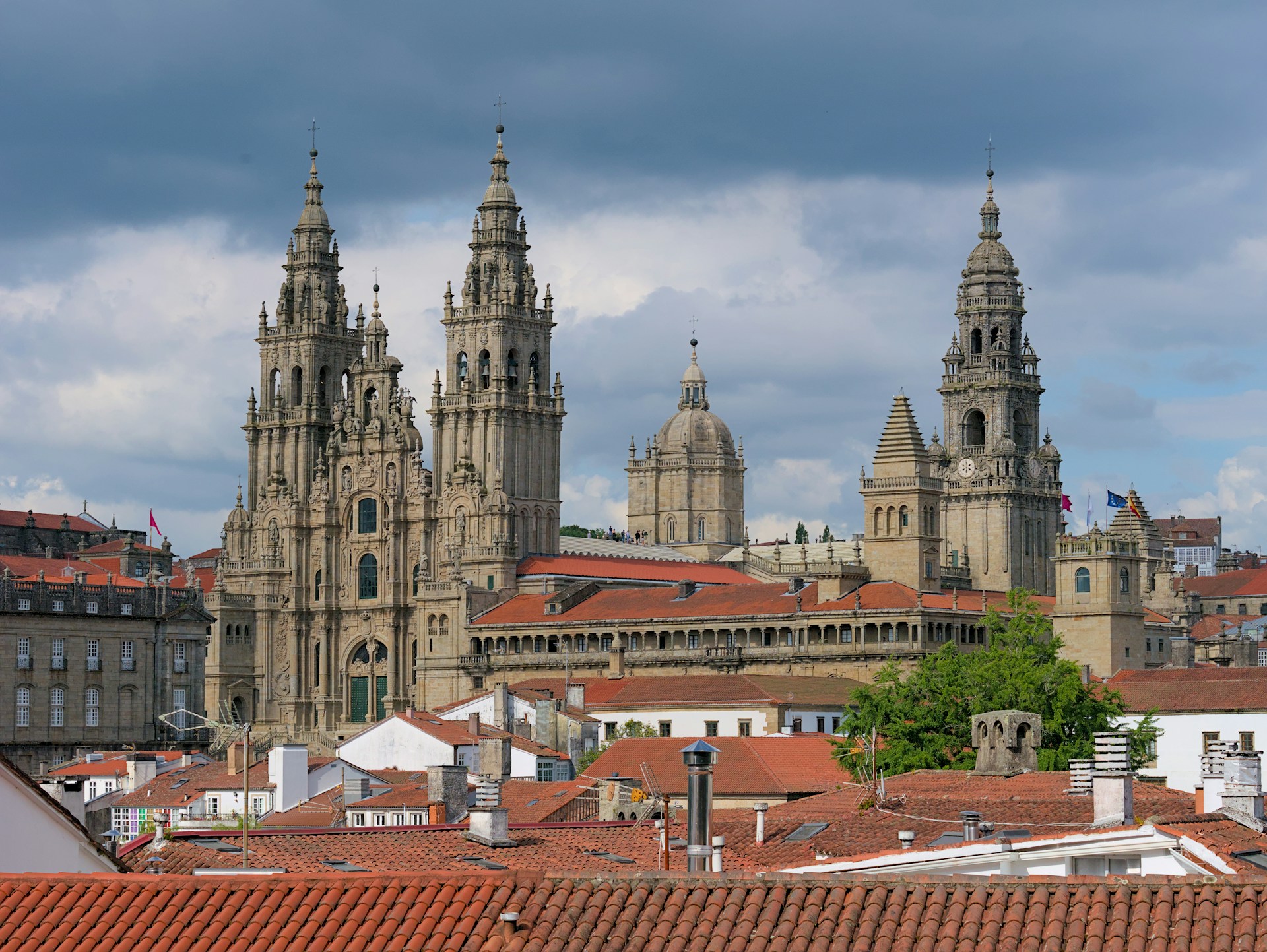
If you are thinking of taking a getaway and wondering what to see in Santiago de Compostela at two days In this guide, we'll tell you the essentials so you don't miss a thing. From the most famous sites like the Cathedral and Plaza del Obradoiro, to more relaxed plans, interesting spots, and visits free, recommendations for Christmas and excursions from the city.
Santiago's city center is small, but it has a lot to offer if you know where to start. Here we make it easy for you and tell you our tips must-see places in Santiago.
- Day 1: Essentials of Santiago de Compostela
- Day 2: More charming corners of Santiago
- What to see and do near Santiago de Compostela
- What to see in Santiago de Compostela at Christmas
- Where to sleep in Santiago de Compostela
- Map with the main tourist attractions in Santiago de Compostela
- Frequently asked questions about Santiago de Compostela
Day 1: Essentials of Santiago de Compostela
Historic district
One of the best ways to start getting to know Santiago is to sign up for a free tour through the old town. Is "free" (although you leave a tip at the end, of course), and it will help you find your bearings and learn many stories that you would miss if you were walking alone historical center It is very concentrated and easy to explore on foot, so in about two hours you will have a good first contact with the city.
Obradoiro Square
It is the most famous square in Santiago and probably the most emblematic in Galicia. Here the pilgrims, here you take the photo and here you breathe in that arrival atmosphere. It is surrounded by important buildings: the Cathedral the Hostel of the Catholic Kings the Raxoi Manor and the College of San Xerome Even though there are a lot of people, the place has its charm.
Look at the ground shells that mark the end of the Camino, in the musicians who usually play in the arcades, and in the tourists (and pilgrims) lying on the ground looking at the façade of the Cathedral... the typical thing is to lie down or sit and contemplate it calmly.
Visit the Cathedral of Santiago and attend the Botafumeiro
The entrance to the Cathedral is free of charge, although you have to pay to enter some parts (like the museum). What you can't miss is the interior, embrace the apostle and, if you're lucky, see the Botafumeiro in action.
If you want more historical context or to see details that would otherwise escape you, this might be interesting. Guided tour of the Cathedral and its museum.
⭐ Botafumeiro in action
It doesn't work every day, only on specific dates or if a group requests it pilgrim masses (usually at 12:00) are the most common times to see them. However, if you're planning to go during major holidays or during Holy Year, there are usually more opportunities.
Stroll along Rúa do Franco and try something typical
Rúa do Franco is one of the most famous streets from the historic center and an ideal place to have a snack Typical, without overcomplicating things. Despite being quite touristy, it still has its charm. Here, it's normal to wander around looking at menus and bars until something convinces you.
What do they eat here? The most typical: octopus a feira, galician pie, raxo (marinated meat), Padrón peppers, squid, razor clams, scallops... And to finish, a good Santiago cake If you are one of those who prefer to be led by the hand, there is a Santiago food tour which visits several taverns and is a good option to try several things without having to decide on your own.
Food Market
If you like markets with an authentic atmosphere, this is your place. It's the second most visited place in the city after the Cathedral fresh produce, food stalls and areas where they cook what you buy. You also have bars small with a good atmosphere to enjoy a wine or a beer. If you want more information about the best restaurants and tapas bars To eat in Santiago, take a look at our article:
Alameda Park and its views of the Cathedral
After lunch, a walk along the Mall feels luxurious. From here you will have one of the best views of the city, with the Cathedral in the background. It's a peaceful park, with interesting sculptures and benches where you can rest for a while.
Inside the Alameda park you will find the sculpture of the two Marys, probably one of the most photographed in Santiago. They depict two sisters who always strolled through the city together, dressed up and wearing makeup, and have become a symbol.
Another of the sculptures that have become very famous is that of Mafalda She's sitting on a bench with a big smile, perfect for taking a photo (if you don't mind waiting in line) if you grew up reading it or if you're just amused to see it around. It was placed there as part of an exhibition, and it ended up staying.
Day 2: More charming corners of Santiago
Quintana Square and the Holy Door
Quintana Square is one of those places worth exploring at a leisurely pace. It has two levels: the Quintana de los vivos (the upper part) and the Quintana de mortos (the lower part), so named because it was a cemetery centuries ago. From here you can access the Holy Door of the Cathedral, which only opens during the Holy Year of Compostela. Otherwise, it will be closed, but it's still impressive.
In this square there is also the wall of the Monastery of San Paio de Antealtares, with its latticed balconies. It's one of those places that changes dramatically depending on the time of day: during the day, it's peaceful, and at night, with the lighting, it's quite photogenic.
Museum of Pilgrimages
This museum is very close to the Cathedral and is a good option if you are interested in the history of the Camino de Santiago It's quite modern, with exhibits on the origins of the pilgrimage, the apostle, and how it has evolved to this day. Admission on some days is free (Check hours and prices before you go.) If you like museums with a local context, it's worth it.
Monastery of San Martín Pinario
Many pass by without entering, but this monastery is the second religious building largest in Spain, only behind El Escorial. Its baroque facade It's impressive, and the interior also has areas that can be visited: the cloister, the church, and the museum. If you'd like to get to know it better, you can include it in a guided tour of the old town.
Walk through the Bonaval Park and Museo do Pobo Galego
This park is a little further from the center (but it's a ten-minute walk away), and it's a quiet place with green areas, trees, stone steps, and different views of the city. Next to it is the Museum of the Galician People, ideal for better understanding Galician culture: traditional costumes, old trades, music, architecture... In addition, the building itself (a former convent) is very beautiful, with a triple interior staircase that draws a lot of attention.
City of Culture of Galicia
Here we enter a more modern space. The City of Culture It's on Mount Gaiás, a little further from the center, but you can get there by bus or taxi. It's an architectural complex that has generated very different opinions (you'll see why). There are exhibitions, a library, viewing points, and open areas for walking. Even if you're not interested in the exhibitions, views of Santiago from here they are worth it if you like taking photos.
Cervantes Square and Vilar Street
The Cervantes Square It is smaller than others, but it has charm. It used to be a place for street vendors and a market. From here you can continue along the Vilar Street, one of the most authentic streets in the old town, with stone arcades, bookshops, jet shops and some of the most beautiful facades in the centre.
What to see and do near Santiago de Compostela
If you stay more than two days or if you want to take advantage of being in Galicia to move around a bit, there are several excursions Highly recommended tours departing directly from Santiago. Here are some ideas depending on what you're in the mood for: nature, the coast, beautiful towns, or something more cultural.
Excursion to Finisterre, Muxía and the Costa da Morte
One of the most popular routes from Santiago. It visits the Cape Fisterra, which for centuries was believed to be the end of the world, and passes through places with a lot of history like Muxia the English cemetery or the Mount Pindus There are daily departures and it's an easy way to see the coast without a car. You can book Here is the complete excursion.
Rías Baixas with winery and boat trip
If you are more interested in good food and drink, this route takes you through Combarro, O Grove o Arousa Island, stopping at one store and a boat trip through the rafts with a mussel and wine tasting included. Very complete and easy to enjoy. Here you can take a look at the excursion with winery and boat.
Cathedral Beach and Lugo
For those who want something more scenic, this excursion takes you to one of the most famous beaches in Galicia. Of course, you have to look at the tides to get a good look at it. The tour also includes a visit to Lugo, which preserves a Roman wall in very good condition. If you don't have a car to go on your own, you can look This excursion that combines both things.
A Coruña
A Coruña is at less than an hour by train or bus from Santiago, so if you want to see the sea and the city in the same day, it's a very good option. In the center you can visit the Tower of Hercules (World Heritage Site), stroll along the marina with its glass facades or visit the Plaza de María Pita. There are also interesting museums such as the House of Science or the Domus Museum.
If you don't feel like organizing anything, you can go with one excursion from Santiago all-inclusive.
Santiago in December It has a very different atmosphere than the rest of the year. It can be cold, it rains more (let's not kid ourselves), but the city is filled with lights, flea markets and more relaxed plans. If you happen to visit during this time, don't think you'll see fewer things; you'll simply enjoy it in a different way.
The most striking thing is the Christmas illumination The historic center. Main streets like Rúa do Franco, Rúa do Vilar, and the Cathedral area are decorated with lights, and although it's not as extensive as in other larger cities, it blends beautifully with the stone and Compostela style. There's a kind of light trail with different decorations and figures, ideal for strolling at dusk.
One of the key points is the Christmas market, which is usually installed in the Quintana Square or in the Mall There you can find handcrafted products, gifts, traditional sweets, and the occasional surprise. If you go with children, there are workshops and activities designed for them. They also often set up a giant nativity scene in the Cathedral, which can be visited free of charge.
Another classic is the cultural programming: Christmas carol concerts, theatre, activities in the City of Culture... and yes, if you're lucky and it doesn't come down with a deluge, there's even some nighttime activities such as the queimada workshop, which is much more appealing in winter.
Finally, don't forget to try the typical Galician sweets of this time, such as the bica or the almonds, which you will find in bakeries throughout the city. And if you stay on New Year's Eve or New Year's Day, the atmosphere in the Obradoiro Square just after the bells are quite special (although not as massive as in other cities).
Where to sleep in Santiago de Compostela
Santiago is a small city and fairly easy to get around on foot, so the ideal thing is to look for accommodation as close as possible to the historical center. Sleeping in the center will allow you to move around without depending on transportation, especially if you go alone a couple of days.
Recommended areas
- Old Town Perfect if you want to immerse yourself in the atmosphere. Here you'll find everything from simple hostels to charming boutique hotels. However, it can be a bit noisy at night, especially on streets like Rúa do Franco.
- Alameda / Ensanche A somewhat quieter area, but only a 5-10 minute walk from the center. There are usually more modern hotels with better value for money and fewer tourists.
- Train station area: Useful if you're traveling by train, although it's a bit further away (about a 15-minute walk from the center). There are several functional hotels.
Types of accommodation
- Tourist apartments and guesthouses: Very common, especially in the city center. Ideal if you're looking for something simple and affordable.
- Shelters: Not just for pilgrims. There are some very well-maintained ones with unbeatable prices if you just need a bed for the night.
- Charming hotels If you're looking for something special, there are accommodations in former monasteries or renovated manor houses.
Our advice: book in advance Whether you're going in the summer, on long weekends, or at Christmas, because Santiago fills up quickly. And if you're going right after finishing the Camino, there's nothing like treating yourself and getting a decent night's sleep.
Map with the main tourist attractions in Santiago de Compostela
To help you organize your visit better, here is a list of map with all the points that we mentioned in this post. This map can help you plan a customized route based on your time. Plus, if you open it from your phone, you can use it as a real-time guide while walking through the city.
Frequently asked questions about Santiago de Compostela
Here are some quick answers to some common questions you might have before visiting Santiago. If you have any more, please leave them in the comments and we'll add them.
How much does it take to see Santiago de Compostela?
With 1 day You can see the main attractions: the Cathedral, the old town, eat something typical and walk along the Alameda.
With 2 days, you will have time to discover quieter corners, enter museums, take a guided tour or even a excursion close.
What to see in Santiago de Compostela in one day?
If you only have one day, the essential thing is the Cathedral the Obradoiro Square, walk through the historic center, the Alameda and eat something typical in the Rúa do Franco Basically, we're going to review the first day we told you about earlier.
Can you visit Santiago without spending a lot?
Yes. Many of the places to see in Santiago de Compostela are free: the Cathedral, the squares, or the parks Eat well without spending a fortune, it is also possible if you go to daily menus or tapas bars.
What to do in Santiago de Compostela when it rains?
You can visit the Cathedral, the Museum of Pilgrimages, the Museum of the Galician People, the City of Culture or sign up for a guided tour of the city accompanied by a good raincoat. Eating well and staying sheltered is also a good plan.
What typical foods to eat in Santiago de Compostela?
Dishes like the octopus a feira, galician pie, raxo, Padrón peppers, scallops o Santiago cake To try out several things, a good idea is to sign up for a downtown food tour.
Where can you see the Botafumeiro?
Inside the Cathedral, during some special masses (usually the pilgrim's, at 12:00). It's not guaranteed every day, but if a group has booked it, you might be lucky. Check at the Cathedral office or on their official website.
Is it worth visiting Santiago at Christmas?
Yes, if you don't mind the cold and the rain lights, markets and atmosphere calm down they have their point. Of course, take warm clothes and waterproof footwear. And book accommodation in advance if you're going on key dates like Christmas Eve or New Year's Eve.
Interesting things to see in Santiago de Compostela?
One of the details that draws attention in Santiago is the number of stores jet, a black stone closely linked to the Camino. Traditionally, it was attributed with protective properties, and many people shop here amulet against the evil eye or some piece as a souvenir.
Another curiosity: look at the scallop shells They decorate many facades, fountains, and floors. They are a symbol of the pilgrim and are everywhere, even embedded in doors or windows. It is also typical to see people touch the statue of the tired pilgrim near the Cathedral or leave offerings on the railings of the Apostle's tomb.
👇 You may also be interested in:If you want to read other articles ideal for your trip that complement What to see in Santiago de Compostela in 2 days you can visit our posts about Galicia.

 Español
 English
 Français
Other interesting articles: